Selective Entry & Scholarships

Selective & Scholarship School Entry Exams

Preparation support for selective school and scholarship entry exams.

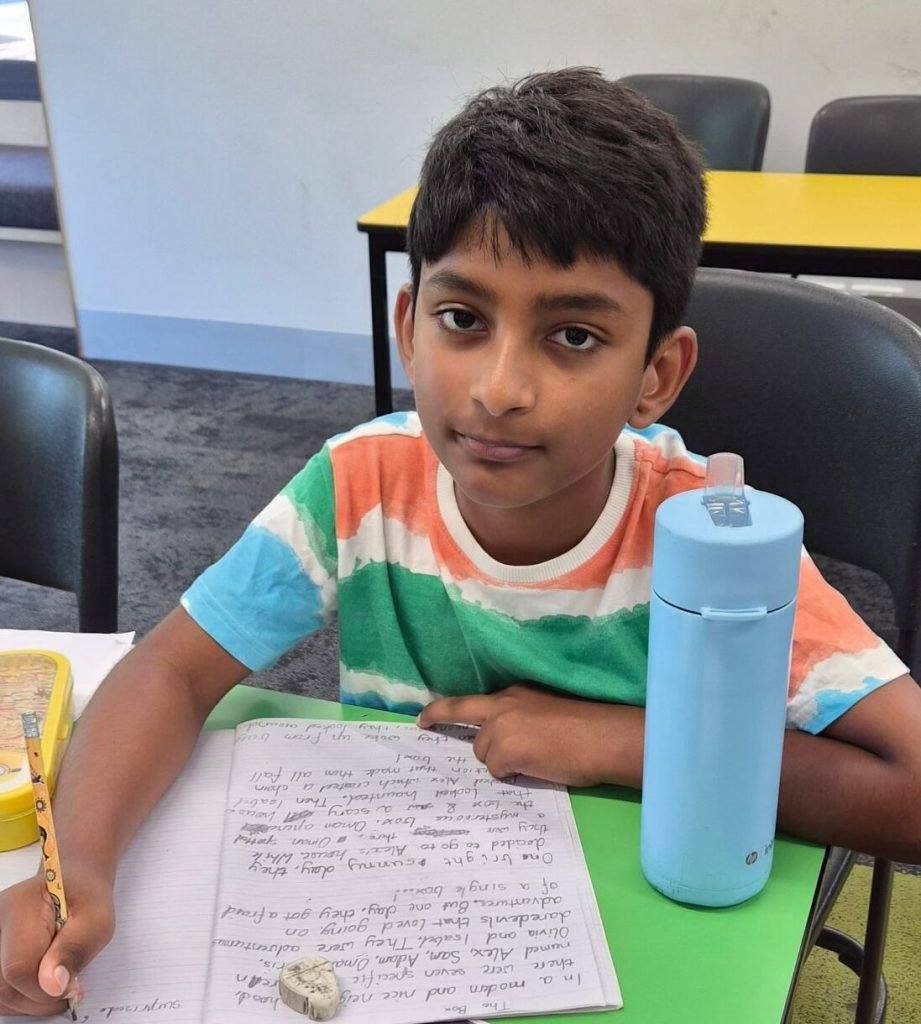
Smiling student sitting at a desk at NRICH Learning

Smiling student sitting at a desk at NRICH Learning

Selective & Scholarship School Entry Exams

For students aiming for selective school placement or a private school scholarship, this program builds the English, mathematics, logic, and reasoning skills needed for competitive entry exams.

  • Targeted preparation across exam-style reading, writing, numeracy, and reasoning tasks.
  • Structured lessons that move from concept clarity to timed practice and review.
  • Support for confident problem solving under assessment conditions.

English: Reading & Comprehension

Inference

Students practise reading beyond the literal text so they can identify implied meaning, evidence, and deeper context.

Author Purpose

Students learn to recognise whether a text is designed to inform, persuade, entertain, or explain.

Synthesising Ideas

Students combine details from multiple parts of a text and build stronger interpretations as they read.

Text Analysis

Students examine point of view, evidence, opposing arguments, and the strength of an author’s position.

Summarising

Students practise reducing long passages into the essential ideas and details that matter most.

Character Traits & Main Idea

Students identify character behaviour, motivation, growth, and the central idea of paragraphs or whole texts.

English: Writing Skills

Figurative Language

Students build control of metaphor, simile, personification, hyperbole, and other language features.

Descriptive Writing

Students learn to create vivid settings, characters, and events using precise detail.

Persuasive Writing

Students develop a clear point of view, support it with evidence, and write with structure and purpose.

Narrative & Expository Writing

Students practise both storytelling and factual explanation, strengthening organisation, clarity, and paragraph flow.

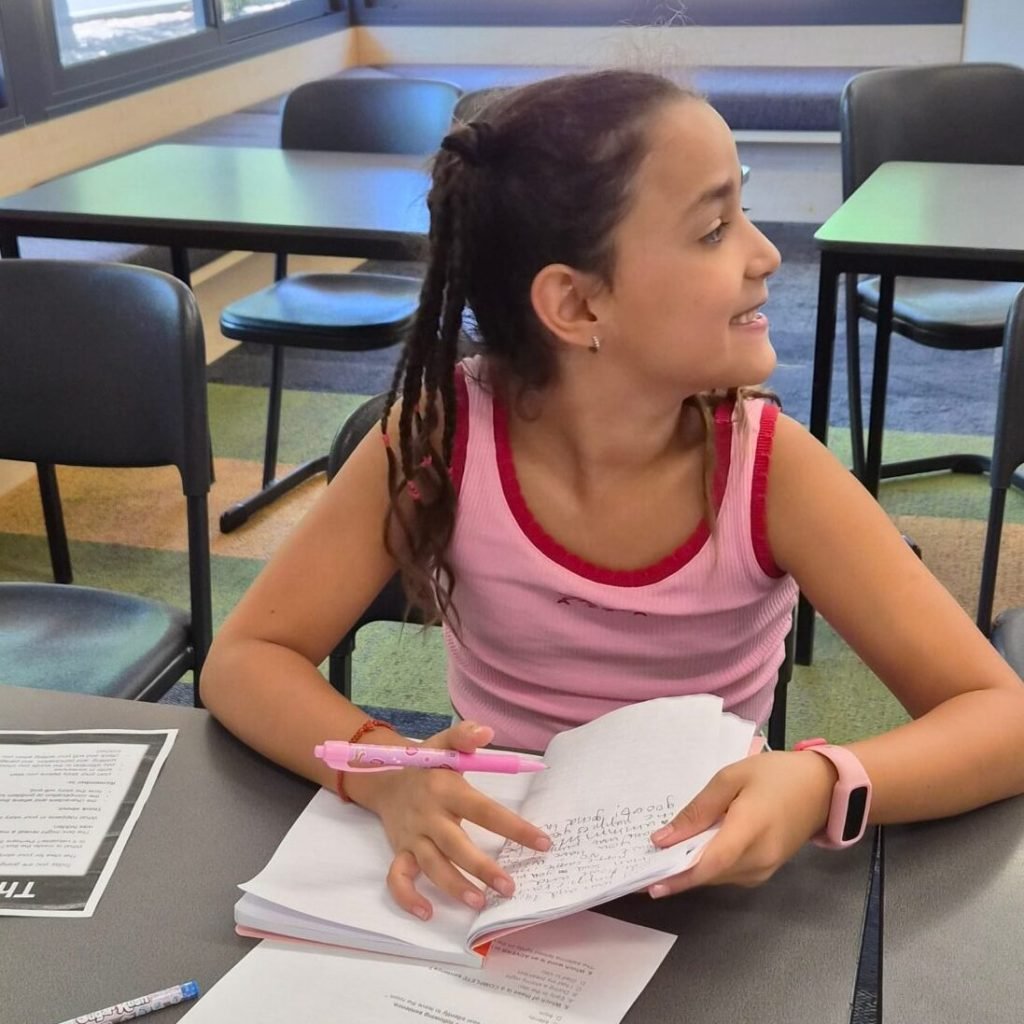
Student reading and writing during comprehension practice

How English Preparation Is Practised

The English component is broken into manageable skill blocks so students can focus on one capability at a time, then combine those skills in full exam-style tasks.

  • Close reading and passage annotation.
  • Short-answer reasoning with evidence from the text.
  • Timed writing plans, drafts, and review.
  • Vocabulary, structure, and expression refinement.

Mathematics: Core Foundations

Number Patterns

Students look for repeated structures in numbers, items, and sequences so they can predict and explain patterns.

Algebra

Students describe patterns, generalise number relationships, and use symbols or models to express change.

Equations & Inequality

Students compare expressions, solve equations, and interpret equality and inequality symbols accurately.

Measurement & Units

Students learn to choose and use units correctly when measuring and comparing physical quantities.

Mathematics: Application & Extension

Graphs & Statistics

Students interpret visual data, compare quantities, and evaluate information shown in tables, charts, and graphs.

Probability

Students use chance and data reasoning to judge outcomes and evaluate arguments supported by numbers.

Geometry

Students work with shapes, figures, construction, measurement, and spatial reasoning.

Word Problems

Students practise identifying context, choosing the right operation, and explaining their working clearly.

Calculus, Functions & Trigonometry

Advanced students are introduced to change over time, function rules, triangle relationships, and extension concepts where appropriate.

Student completing written numeracy practice at NRICH Learning

Mathematics Practice Flow

Students move from pattern recognition and method selection into exam-style questions where speed, accuracy, and explanation all matter.

  • Build fluency with core number and algebra skills.
  • Apply concepts in worded and unfamiliar problems.
  • Interpret graphs, tables, and probability questions carefully.
  • Review working steps to reduce avoidable errors.

Logic & Reasoning

Problem Solving Techniques

Students practise choosing strategies, testing assumptions, and explaining how they would approach unfamiliar problems.

Analytical Reasoning

Students analyse information, identify patterns, and draw logical conclusions from given data.

Verbal Reasoning

Students extract meaning from text, make deductions, define words in context, and answer reasoning questions.

Numerical Reasoning

Students interpret facts, figures, tables, and statistical information before selecting the strongest answer.

Mind Maps

Students use visual planning to organise ideas, capture links, and simplify complex concepts before writing or solving.

Student raising her hand during a NRICH Learning lesson

Built For Exam Confidence

Each area is taught as a clear skill set, then revisited through mixed practice so students become more confident, accurate, and calm under time pressure.

  • Concept learning before timed drills.
  • Practice questions that reveal gaps early.
  • Review cycles that turn mistakes into next-step goals.
  • Balanced preparation across English, mathematics, and reasoning.